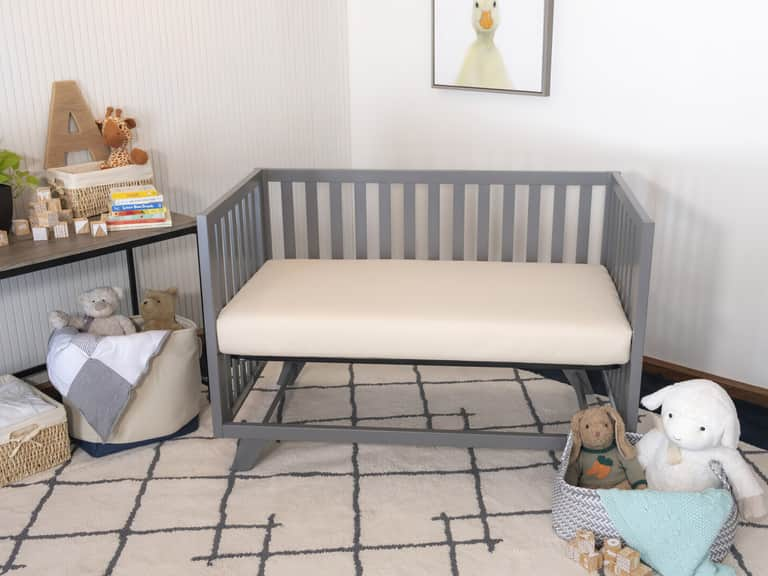
Crib mattresses provide a supportive, appropriately sized sleep surface designed for an infant’s crib. Key considerations include a firm, flat feel, secure fit, durable construction, and materials suited to regular use. These features help caregivers assess how a mattress functions within a baby’s sleep environment and how its cover and core can be maintained.
Organic crib mattresses are made with materials selected to meet specific environmental or material preferences, though construction varies by model. The Obasan Organic Crib Mattress is an example of an organic option; its material composition and design are relevant when comparing support, firmness, and care requirements. Reviewing product specifications helps clarify how a mattress suits a particular crib.
The Naturepedic Breathable 2-Stage Organic Crib Mattress combines a breathable design with two intended stages of use. A two-stage construction can accommodate changing needs as an infant grows, while the breathable feature describes an aspect of the mattress’s design. Caregivers should consult product guidance for details on the stages, fit, and safe use.
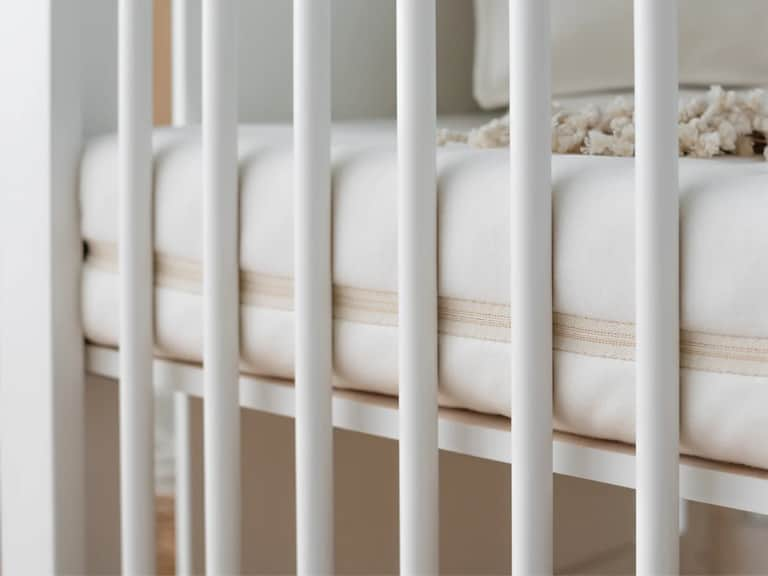
Mattress fit and surface condition are important practical considerations: the mattress should correspond to the crib dimensions, remain flat, and be used according to its manufacturer’s instructions. Removable or washable covers, when specified, can simplify routine care. These characteristics distinguish crib mattresses from general bedding such as sheets and pillows, which serve different functions.
When evaluating crib mattresses, compare dimensions, firmness guidance, materials, construction, and cleaning instructions rather than relying on broad labels alone. Organic mattresses may appeal to families considering material choices, while features such as staged support or breathability address other priorities. Memory foam pillows and other bedding belong to separate sleep products, not the crib mattress surface.
 Nursery