Mattress Construction
Inside a Hybrid Mattress: How Vispring Combines Springs and Comfort Layers
The word “hybrid” promises a union: a spring system for support, cushioning layers for comfort. But there is no single blueprint behind the label. A closer look at Vispring’s pocket springs and natural upholstery shows why the details of construction—and the way they suit a sleeper—matter more than the category name.
The hybrid idea, without the shorthand
A mattress can look simple from the outside. Beneath its fabric cover, however, it is a small architecture: layers that carry weight, cushion pressure, regulate warmth and hold their shape over time. A hybrid mattress is generally understood as one that combines a spring support system with substantial comfort layers above it. That description covers a wide range of designs, from pocket coils topped with memory foam to traditional spring units upholstered with wool, cotton or other natural materials.
That variety is useful for shoppers, but it makes the word “hybrid” a blunt tool. Two mattresses carrying the same label may feel markedly different. One might have a spring core beneath a deep foam comfort package; another could use individually wrapped springs with a thinner layer of latex or fiber. The springs may differ in number, tension, height and arrangement. The layers above them may differ in material, thickness, density and method of attachment.
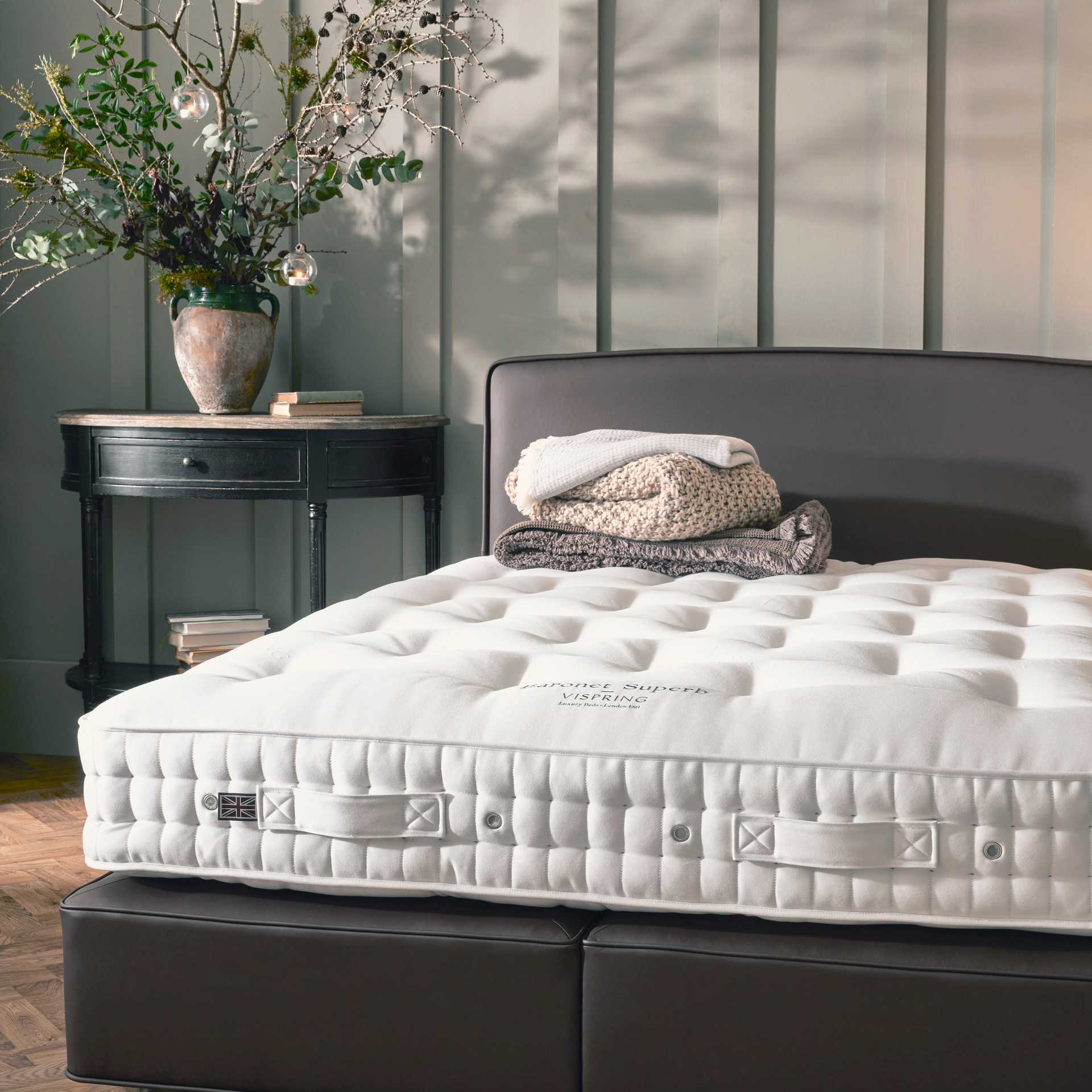
Vispring offers a useful case study because its construction makes those components unusually legible. The Baronet Superb, for example, pairs individually pocketed steel springs with layers of British fleece wool and cotton. It is not the familiar picture of coils beneath a thick slab of foam. Instead, it demonstrates a broader principle: a spring mattress can be shaped by upholstery, and those materials are part of the comfort system—not decorative extras.
Understanding that distinction helps turn mattress shopping from a contest of labels into a practical comparison. Instead of asking only whether a bed is hybrid, ask what supports the body, what sits between the springs and the sleeper, and how the complete arrangement is expected to feel.
What pocket springs actually do
In a pocket-spring design, each coil sits inside its own fabric casing. The springs are arranged side by side, but their individual pockets allow them to respond more independently than coils joined into a single interconnected unit. When a sleeper presses down in one area, nearby springs can compress without requiring the entire mattress to move as one piece.
That independence can help limit the transfer of movement across the bed. It may matter to couples, especially when one person changes position or gets up while the other remains asleep. The effect is not absolute: movement can still travel through the mattress, its comfort layers or the bed frame. But the behavior of individually pocketed springs is a key reason the construction is often associated with more localized response.
Springs also provide the underlying structure that resists compression. Their response depends on more than how many are present. Wire gauge, coil shape, spring height, tension, spacing and the way the unit is assembled all contribute. A higher spring count by itself does not establish that a mattress will be more comfortable or supportive. Counts may also be reported for different sizes or different parts of a product, so comparisons require like-for-like specifications.
The Baronet Superb’s product specifications describe 1,716 individually pocketed springs in a king size, formed from vanadium steel. The spring layer is offered in four tensions: Soft, Medium, Firm and Extra Firm. A split-firmness option across the width is also available in king sizes, allowing two sides to be specified differently. These details illustrate what a useful specification can reveal: not just that a mattress contains springs, but how the spring system can be configured for different preferences.
“Support” is often used as if it were a fixed property that can be read from a product label. In practice, it is a relationship between the mattress and the person using it. Body weight, shape, preferred sleeping position and personal comfort all affect how a given spring tension feels. A firm option is not automatically the right choice for every back, nor does a softer surface necessarily mean inadequate support. The goal is a surface that feels comfortable while keeping the body in a position the sleeper can maintain without strain.
The comfort layers above the coils
Springs are only one part of the experience. The layers above them influence how quickly the mattress responds, how much it cushions shoulders and hips, and how much the sleeper feels the spring unit. In many contemporary hybrids, those layers may include memory foam, latex, polyfoam, fiber or a combination. In a traditionally upholstered design such as the Baronet Superb, wool and cotton do much of that work.
The Baronet’s listed construction uses two upholstery layers with different roles. A bonded British fleece wool and cotton layer provides cushioning closer to the surface. A blended British fleece wool and cotton layer beneath it adds further upholstery and is described as helping draw moisture away from the body. Natural fibers can contribute breathability and a less synthetic feel, but those characteristics should not be turned into universal guarantees: warmth and moisture comfort depend on the full construction, bedding, room conditions and individual sleeper.
Layer order matters. A material placed close to the body will shape first contact differently from the same material placed deeper in the mattress. Thickness matters, too: a deep, yielding top section can create a more enveloping sensation, while a firmer or thinner comfort package may allow the springs to be felt more directly. The cover, quilting and tufting also affect the way the surface behaves.
That is why a materials list cannot fully describe a mattress. “Wool and cotton” says what is present, but not exactly how the mattress will feel. The proportions, density, processing and arrangement of those materials are part of the design. Where details are available, shoppers should look for the layer sequence and thickness, not merely a headline ingredient or a claim about natural content.
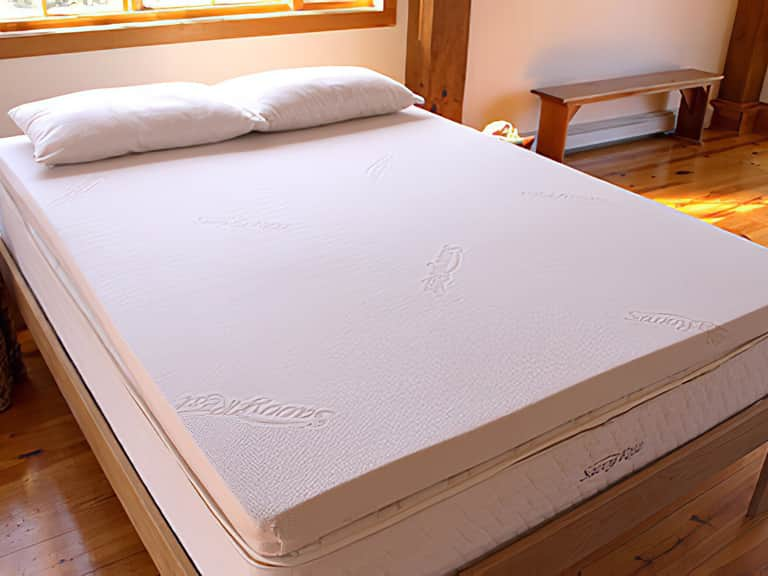
For a related example of how a separate cushioning layer can change a sleep surface, the Savvy Rest Vitality Latex Mattress Topper uses a three-inch layer of soft natural Talalay latex in an organic cotton cover. A topper is not the same thing as a mattress’s built-in comfort package, and it cannot correct every mismatch in support. But it illustrates how a distinct upper layer can add cushioning and alter the feel of the surface.
A closer look at the Vispring Baronet Superb
The Baronet Superb brings together its spring unit, natural-fiber upholstery and hand-finished details in a mattress described as an entry point to the Vispring collection. Its product information lists a depth of 8.3 inches, plus 2.4 inches of natural doming. That figure is worth reading carefully: the mattress’s overall profile includes a domed upper surface, so the stated dimensions distinguish the main depth from the additional rise.
Along the sides, two rows of hand side-stitching bind the spring perimeter to the upholstery. Edge construction matters because the boundary of a mattress is not merely a visual finish. It affects how stable the sides feel when someone sits near the edge and how much of the bed’s surface can be used comfortably. Side stitching is one way manufacturers reinforce that perimeter, though the actual experience will depend on the whole build and the load placed on it.
The mattress is also hand tufted with felt washers. Tufting draws the upholstery layers together at intervals, helping hold fillings in position and maintain more uniform compression. It is a traditional construction technique, but its relevance is practical: loose or shifting layers can create unevenness, while a method that secures the fillings can help them remain in place. As with any construction feature, it is one part of durability rather than a promise that a mattress will never change with use.
Air vents in the border are listed as another feature. Ventilation pathways can support passive air exchange through a mattress, though they do not amount to active cooling. The word “breathable” is best understood as a description of how materials and construction may allow air and moisture to move—not as a guarantee that every sleeper will remain cool in every room or season.
These details make the Baronet a useful example of how to read a specification sheet. It identifies the spring material and count, offers multiple tensions, describes upholstery layers and notes the construction of the sides and top. Those facts are more informative than a broad claim that a mattress is luxurious, supportive or hybrid. They still need to be considered alongside a person’s own experience, but they give a shopper questions to ask and comparisons to make.
How to compare hybrid mattress designs
Good comparison begins with the support system. Check whether the springs are pocketed or interconnected, and look for the spring count alongside the size to which it applies. If the manufacturer publishes tension choices, coil height or other specifications, record them. Avoid treating any single number as a complete measure of quality; construction is a system, and the details work together.
- Identify the comfort materials. Look for the materials above the springs and, where possible, their order and thickness. Foam, latex, wool, cotton and fiber each behave differently, but the complete layer design matters more than a material name alone.
- Ask how the surface should feel. Descriptions such as plush, responsive or contouring can be helpful starting points, but they are not standardized measurements. If possible, test the mattress in a position and for a length of time that reflect how you actually sleep.
- Consider edge construction. If you use the edge to get in and out of bed or regularly sleep near it, ask how the perimeter is reinforced and test it directly where possible.
- Check the full dimensions. Mattress height can affect sheet fit, bed-frame compatibility and how high the finished bed sits. Confirm whether a listed measurement includes doming or other design features.
- Read the care and warranty terms. Confirm the permitted foundation, rotation or flipping instructions, and what the warranty covers. A maintenance direction should be specific to the product rather than assumed from another mattress.
- Compare the complete offer. Price, delivery, setup, trial period, returns and warranty conditions all influence the practical value. A construction description does not answer those questions.
For shoppers comparing a foam-and-spring hybrid with a natural-fiber spring mattress, the most useful question is not which category wins. It is how each design distributes pressure and responds to movement. Foam may create a more contouring or slower-response sensation, depending on its formulation. Latex can feel more buoyant and springy. Wool and cotton upholstery offer a different kind of cushioning and surface character. None of these descriptions is a substitute for trying a mattress, but they can clarify what to pay attention to.
Fit depends on the sleeper, not the label
Sleeping position can guide a first comparison, but it is not a formula. Side sleepers often pay close attention to how the mattress accommodates the shoulders and hips. Back sleepers may focus on whether the surface feels balanced under the torso and pelvis. Stomach sleepers may be especially alert to excessive sinking through the middle. Yet body proportions, personal preference and existing discomfort all complicate neat rules.
Couples face an additional challenge: one mattress must serve two bodies, and those bodies may have different preferences. A split-firmness configuration, such as the option described for the Baronet Superb in king size, can address part of that difference. It does not make every side of the bed entirely independent, since the surface and other materials remain part of a shared structure, but it offers a way to specify different spring tensions across the width.
Temperature is also personal. A sleeper’s experience depends not only on the mattress but on the room, pajamas, sheets, mattress protector and comforter. Natural materials may be selected for their breathability and moisture behavior, while foams vary considerably in formulation and construction. Instead of relying on a single “cooling” label, consider all the layers between the body and the room—and look for product details that explain what a material is intended to do.
A mattress is a substantial purchase, and online descriptions can make distinctions feel more certain than they are. Where an in-home trial or return policy is available, read its conditions before relying on it. When testing in person, take time to settle into the positions you use at night; a quick sit at the edge says little about how the surface supports the body while lying down.
Care, longevity and realistic expectations
Every mattress changes with time. Materials compress under repeated use, and comfort can shift as upholstery settles. Hand tufting, reinforced borders or durable spring materials may form part of a design intended to hold together well, but no feature can guarantee an unchanged feel indefinitely. Longevity depends on construction, use, environment and care.
Follow the manufacturer’s instructions for the exact model. Some mattresses are designed to be rotated; others may have a one-sided construction and should not be flipped. Use an appropriate foundation, because a frame that fails to support the mattress as required can affect its performance. A protector can help guard against spills and everyday soiling, but it should fit correctly and should not interfere with the intended feel or care instructions.
For the Baronet Superb, the product information specifies spring tensions and upholstery details, but owners should consult the current manufacturer guidance for care and foundation requirements. Do not assume that a traditional-looking mattress should be maintained in the same way as another spring model. Instructions can differ even when products share a broad category.
Warranties also deserve careful reading. They commonly distinguish manufacturing defects from normal changes in comfort or wear, and they may set requirements for foundations, use or documentation. A warranty is not a prediction of how long a mattress will feel new. It is a contract with specific terms; those terms are more useful than a general longevity claim.
The better question is what the layers are doing
Hybrid design is less a fixed recipe than a way of combining structures. Pocket springs can provide localized response and a resilient base. The layers above them determine much of the initial cushioning, temperature behavior and surface feel. Edge treatments, tufting and ventilation add further dimensions to the build. A name like “hybrid” tells the shopper where to begin, not where to end.
Vispring’s Baronet Superb shows how a mattress built around pocket springs can use wool-and-cotton upholstery rather than relying on a thick foam comfort layer. Its spring count, selectable tensions, split-firmness option and hand-finished details give shoppers concrete features to evaluate. Whether those choices are right for a particular person is a separate question—one answered through careful comparison, product testing and attention to fit.
In the end, the most useful mattress specification is not the longest or most technical. It is the one that helps explain how the bed is built, what each layer contributes and what the sleeper can reasonably expect. Read beyond the label, compare like with like, and treat comfort as personal rather than universal. That is how a crowded field of hybrid claims becomes a more intelligible decision.